Project Delivery

A practical checklist for insulation handover and inspection

By the time an insulation system is finished, the part that does the work is invisible. Which is why the inspection has to happen before that.
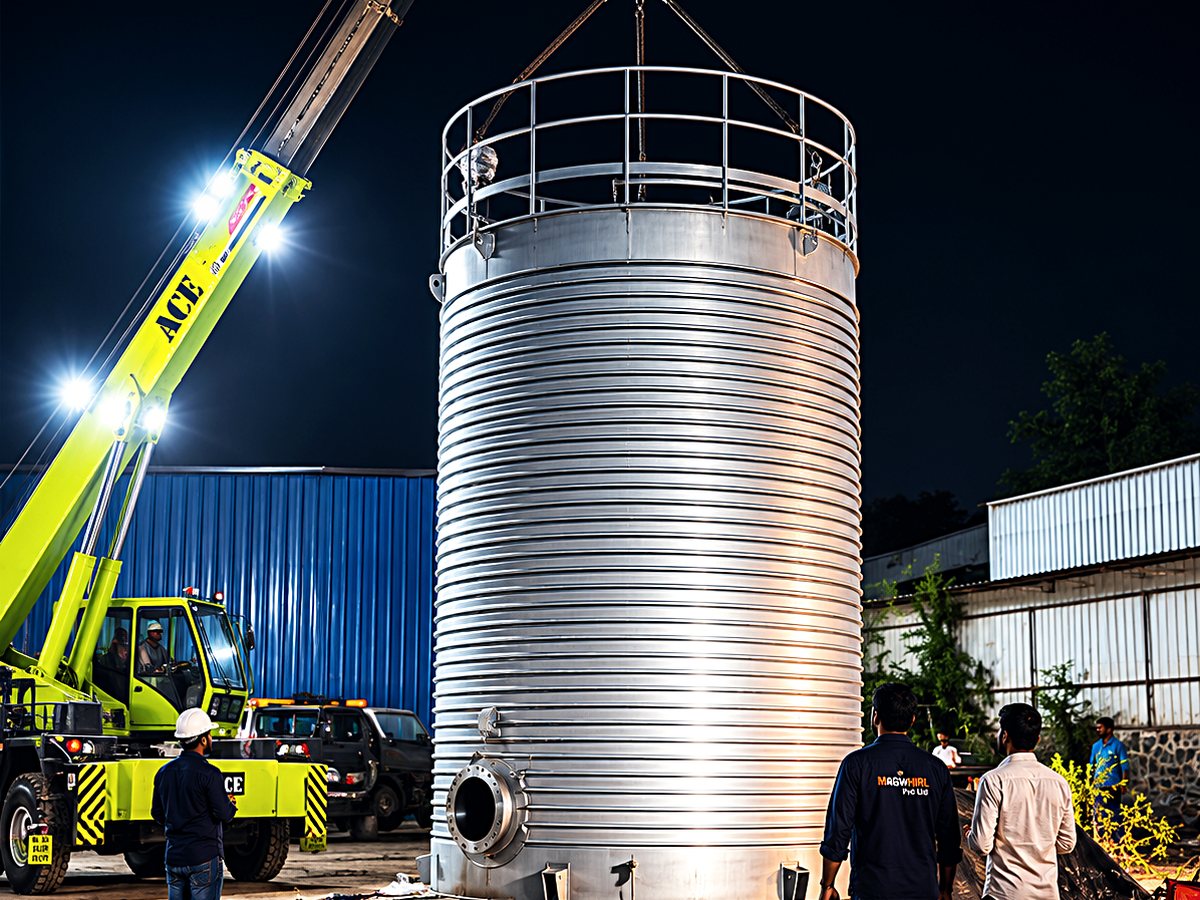
Insulated and clad storage tank being lifted into position by crane at night

The defining problem with inspecting insulation is timing. Once cladding is on, you can assess the finish and nothing else. The insulation, the vapour barrier and the supports — everything that determines performance — is sealed away.

So inspection has to be staged, and the stages have to be agreed before work starts.

Hold points#

Agree these in the quality plan, not on site:

1. Surface preparation, before insulation. Corrosion under insulation begins with what was underneath at the start. Check the coating condition, that repairs are complete and cured, and that the surface is dry. Insulating over a damp or damaged surface seals in a problem for a decade.

2. Supports and attachments, before insulation. Verify that supports do not bridge the insulation, and — on cold systems — that load-bearing inserts are correctly positioned. This cannot be corrected later without stripping.

3. Insulation installed, before the vapour barrier. Check thickness, joint tightness, staggering between layers, and that fitted sections actually fit rather than being forced. Gaps at fittings and valves are the most common finding.

4. Vapour barrier complete, before cladding. The critical hold point on any cold system. Check continuity, sealed joints, vapour stops at the specified intervals, terminations at every interruption, and that nothing has been punctured by a fixing.

5. Cladding complete, at handover. Lap direction, terminations, fixing placement, formed collars at penetrations, banding.

What to look for at each stage#

Before insulation#

  • Coating intact, repairs cured
  • Surface dry
  • Supports correctly positioned and not bridging
  • Any inspection openings identified and agreed

Insulation installed#

  • Thickness matches specification (measure — do not eyeball)
  • Joints tight and staggered between layers
  • Fitted sections at bends, tees and reducers, not site-butchered straights
  • Valves, flanges and small-bore branches actually insulated, not deferred

Vapour barrier#

  • Continuous, with every joint sealed
  • Vapour stops present at specified intervals
  • Terminations closed at all interruptions
  • No penetrations from fixings
  • No damage from subsequent trades

Cladding#

  • Vertical laps shed downward, along the entire run
  • Horizontal longitudinal joints at the side or underneath, never on top
  • Terminations closed with formed caps, not sealant alone
  • Fixings in valleys, not crowns
  • Formed collars at every penetration, lapping correctly
  • Banding evenly spaced and tensioned

Photograph everything before close-up#

The single most useful thing a project can do.

Photograph the vapour barrier before cladding. Photograph the insulation before the barrier. Photograph the substrate before insulation. Label by location.

When a problem appears in year three, the difference between a targeted repair and stripping a whole run is whether anyone can see what was actually installed.

The handover package#

What should change hands at the end:

  • Material certificates for insulation, vapour barrier and cladding
  • Signed hold-point records
  • Photographic record, indexed by location
  • As-installed drawings showing thicknesses and material types by line
  • Any deviations, with the approval that authorised them

That last item is the one most often missing. Deviations happen on every job. An undocumented deviation is indistinguishable from a defect when someone investigates it years later.

Why this is worth the effort#

Insulation is a long-life system installed quickly and then ignored. The cost of getting it wrong is not the rectification — it is the corrosion underneath, discovered late, on plant that then has to come off line.

Staged inspection is the cheapest risk control available on the whole scope.

We work to staged hold points as standard and hand over the record with the work. Talk to us about your project.

Keep reading

All insights