Kitchen Engineering

Induction versus flame in institutional kitchens

At a few thousand covers a day, the argument stops being about cooking preference and becomes one about ventilation load, ambient temperature and ignition sources.
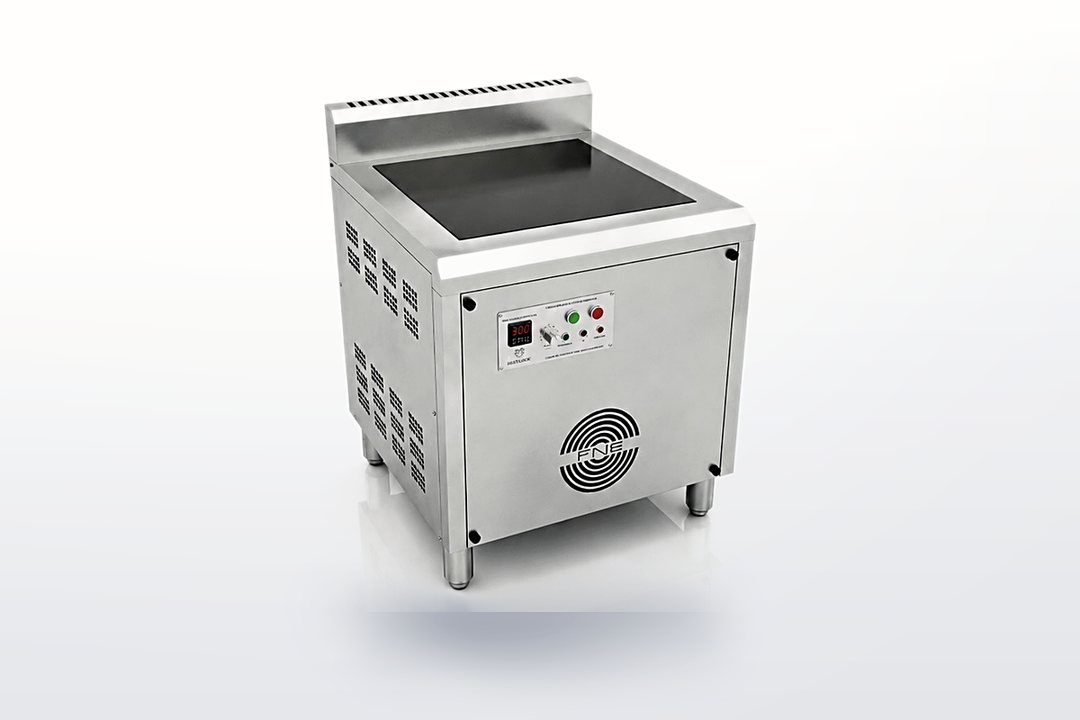
Commercial induction cooktop unit in stainless steel

In a domestic kitchen, induction versus gas is largely a matter of preference. In a kitchen producing several thousand covers a day, it is an engineering decision with consequences for the building.

Where the energy goes#

A gas burner heats the pan, and it also heats the air, the surrounding surfaces and the operator. A large share of the fuel energy never reaches the food.

Induction couples energy directly into the base of a ferrous pan. The hob itself does not become a heat source except by conduction back from the pan.

The difference shows up in the room, and that has knock-on effects:

Ambient temperature. A flame-fired line in an Indian summer produces a working environment that is genuinely difficult. Reducing waste heat at source is more effective than trying to extract it afterwards.

Ventilation load. Extraction is sized for the heat and combustion products it has to remove. Less waste heat means a smaller system, lower fan power, and less conditioned air pulled out of the building and replaced.

Comfort and retention. Kitchens are hard to staff. A cooler line is not a soft benefit.

Control response#

Induction power tracks the control setting essentially instantly. A gas flame has thermal inertia in the burner and the pan support.

At volume this matters for consistency. When a batch has to come off heat now, the ability to actually stop applying energy is worth more than raw power. It is the same reason the response of a tawa station matters more than its rated kilowatts.

Ignition sources#

Removing open flame from a space containing hot oil removes a category of risk rather than reducing it.

That is why hospitals in particular specify induction. It is not primarily an energy decision there — it is a fire-safety and air-quality decision, and no combustion also means no combustion products in the kitchen air.

The honest constraints#

Induction is not free of trade-offs.

Pans must be ferrous. Existing aluminium and copper will not work. Replacement cost is real and belongs in the business case.

Electrical supply must genuinely be adequate. This is where institutional installations most often come unstuck. The connected load of a full induction line is substantial, and "there is a spare breaker" is not the same as having the supply capacity. Assess it before ordering equipment, not after delivery.

Capital cost is higher per unit. The payback comes from energy, ventilation sizing and maintenance, not from the purchase price.

Repairs need an electronics technician, not a gas fitter. Where the equipment will live, that matters — check who can actually service it.

How to decide#

For a kitchen at institutional scale, work through four questions:

  1. What is the connected load, and does the supply genuinely support it with headroom?
  2. What does the ventilation system currently cost to run, and what would it cost sized for a cooler line?
  3. Is there a fire-safety or air-quality requirement — as there usually is in healthcare — that makes open flame undesirable regardless of energy?
  4. What is the realistic cost of replacing pans, and who will service the equipment?

If the answers point to induction, specify the line around the workflow rather than around the drawing — and commission it with the kitchen team present, so the people using it understand it from day one.

We survey, specify, supply and commission commercial induction kitchens. Tell us about your kitchen.

Keep reading

All insights